You start with a simple idea: a wonderful trip to Japan together. Then come the hotel tabs, train maps, restaurant lists and conflicting advice. Before you have booked anything, planning can begin to feel like a second job.
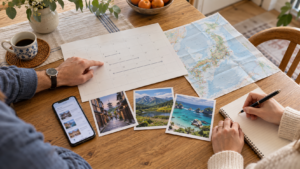
If you are wondering how to plan your first trip to Japan, start by making the big decisions in a sensible order. You do not need to understand every train line or decide every meal today. This guide helps you work from the shape of the journey down to the details, with space for the experiences that matter to you.
The simple order: dates, route, stays, experiences, details
Begin with your priorities and available time. Sketch a route and budget, then check flights and accommodation together before committing. Once those foundations fit, arrange the experiences that need advance booking and finish with local transport and arrival details.
These decisions sometimes overlap. If one particular ryokan or experience is the reason for your trip, check its availability before fixing your dates. The aim is to avoid making an expensive commitment before you know whether the rest of the journey works.
1. Decide what you want to remember
Before choosing destinations, each of you should write down three things you would love to experience. These might be a peaceful hot-spring stay, beautiful gardens, regional food, contemporary art or evenings exploring local streets.
Compare your lists. Mark the shared priorities, then make room for something important to each person. Also discuss the practical side: how much walking you enjoy, whether you like early starts, and how frequently you are willing to change hotels.
A useful starting brief: “We want two weeks with memorable food, time in Kyoto and a special overnight stay. We are happy to use trains, but we want some slower mornings and no more than a few hotel changes.” That is already a clearer guide than a list of fifty attractions.
2. Count your days in Japan, not just your days off
Check when your flights would actually arrive and depart. A two-week holiday from work does not necessarily give you fourteen full sightseeing days in Japan. Arrival, departure and recovery from a long flight all need space.
Write down the number of nights you can spend in Japan. Then identify the first and last usable days. Avoid assigning an important prepaid experience to your arrival afternoon before you know your flight times and transfer arrangements.
When choosing your travel period, think about your tolerance for heat, rain, crowds and changing plans. If seasonal scenery is a priority, allow flexibility: a particular flowering or foliage display cannot be guaranteed for your exact dates.
3. Choose a small number of bases
A base is somewhere you sleep for several nights and explore from. It gives the trip structure without requiring you to pack every morning. Start by deciding which places deserve an overnight stay and which could be day trips.
For a first visit, Tokyo and Kyoto can form the core of a route. A stay in Hakone and time in Osaka can add different experiences if you have enough nights. The important question is whether the transfers and pace fit your interests.
Our 14-day Japan itinerary for first-time visitors provides a worked example: Tokyo for four nights, Hakone for two, Kyoto for five and Osaka for two. Use it as a starting point and adjust it before booking.
If you want to add another region, decide what it replaces. A distant destination needs more than the time you spend at its main attraction: you also need to account for packing, station transfers, check-in and finding your way around.
4. Build a budget around your priorities
Separate your estimate into international flights, accommodation, transport within Japan, food, activities and a contingency. Keep the assumptions visible so that a change in hotel standard or route does not silently change the whole budget.
For a couple, distinguish shared costs from per-person costs. A room may be shared, while train tickets and many experiences are charged for each traveller. Confirm whether a quoted accommodation price is per room or per person, and what meals or charges it includes.
Choose where spending more would improve your trip. You might prefer a special ryokan night and otherwise comfortable, straightforward hotels. Another couple may value spacious rooms throughout. Neither approach needs to dictate how anyone else travels.
Use prices for your actual dates before committing. An attractive sample price or an old travel blog is not a reliable quote for your stay.
5. Check flights and hotels together
Compare arriving and departing from the same city with flying into one city and out of another. Look at the whole journey: airfare, any extra domestic transfer, an additional hotel night and the time spent returning to your departure city.
Before buying flights, check that suitable accommodation is available along your proposed route. Before booking non-refundable hotels, make sure the flights and transfers fit. Keep a simple record of cancellation deadlines as you make reservations.
In each city, consider the route from your arrival station, nearby transport, restaurants, room size and bed configuration. “Five minutes from a station” is less useful if it is the wrong station for your plans or an awkward route with luggage.
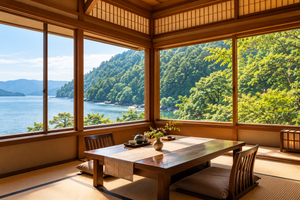
For a ryokan, confirm meal times, sleeping arrangements, private bathing options and any accessibility or dietary requirements directly. Those details can have a bigger effect on your stay than an impressive photograph.
6. Reserve the few experiences that shape your trip
Identify the things you would be genuinely disappointed to miss. These might include a particular meal, a small-group activity, a ticketed attraction or an anniversary experience. Check each provider’s official reservation process and booking release dates.
Add confirmed bookings to one shared calendar. Include the address, arrival time, cancellation terms and any instructions—not just the activity name. Allow enough time to reach it from where you will actually be that day.
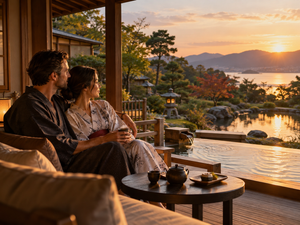
If you are planning a surprise for your partner, make the arrangements around their preferences and confirm the details with the venue in advance. A personal message or a thoughtfully chosen dinner can be meaningful without requiring an elaborate performance.
Keep the surrounding day light. A special evening is easier to enjoy when you are not rushing back from an ambitious day trip.
7. Plan each day around one main experience
Choose a main reason for the day, then group nearby activities around it. A morning in a historic neighbourhood, lunch nearby and a relaxed afternoon can make a satisfying day without several cross-city journeys.
Distinguish between a sightseeing day and a transfer day. A train journey includes more than the time on board: getting to the station, navigating it, collecting luggage and reaching the next hotel also use time and energy.
Leave some afternoons or part-days open. They give you room for bad weather, tiredness, a place you want to revisit or something you discover along the way. A flexible space in the itinerary is a deliberate choice.
8. Make a transport and luggage plan
List your journeys between bases before choosing rail tickets or passes. Compare the current prices and coverage for the journeys you will actually take. A nationwide rail pass is not an automatic requirement for a Japan trip.
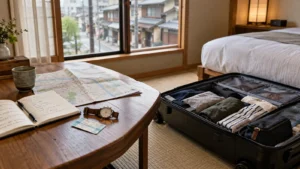
For each hotel change, note your departure station, arrival station, onward route to the hotel and any reservation requirements. Check the operator’s luggage rules before choosing your seats.
Luggage forwarding can make some transfers easier. Ask both accommodations whether they can send and receive bags, and confirm delivery timing before relying on it. Pack what you need for the intervening nights separately. The JNTO guide to luggage and storage explains the available types of services.
9. Make your first evening easy
Prepare a short arrival plan that you can read even when tired: how to reach the hotel, its address, check-in arrangements and what to do if your flight is delayed. Save the essential details offline.
Decide how you will access mobile data and confirm device compatibility with your chosen provider. Prepare suitable payment options, check your bank’s overseas conditions and plan how you will access cash if needed.
Check current entry requirements for your nationality and circumstances through the relevant official authorities before booking and again before departure. Use the Japan National Tourism Organization’s planning pages as a starting point for official travel information, then follow the appropriate authority or operator for specific requirements.
You do not need to fill the first evening. A nearby meal, a short walk and sleep may be exactly the right start.
10. Keep one version of the plan
Create a single shared document with your itinerary, bookings, addresses and essential contact details. Put confirmed arrangements in it as you go, and distinguish them clearly from ideas you have not booked.
Agree on who is handling each outstanding task. For example, one person might compare hotels while the other checks the experiences you both want. Review the decisions together before paying.
Once the trip fits your priorities and budget, stop reopening every choice simply because another recommendation appears. You can always save an idea for a later visit.
A final check before you call the plan ready
Route: Every night has a base, and your arrival and departure airports fit the route.
Pace: Transfer days have room around them, and you have planned breaks and flexible time.
Bookings: Important reservations, arrival instructions and cancellation deadlines are recorded in one place.
Practical details: You have checked your arrival transfer, luggage arrangements, connectivity and payment options.
Personal touches: The itinerary includes things both of you want to experience—not just places you feel you should see.
When is it worth getting help with your Japan trip?
You may be comfortable booking everything yourself but still want someone to review the route. Or you may have limited planning time, several competing priorities, or a special occasion that needs more thought.
Useful planning help should make the choices clearer: what fits your dates, which transfers are realistic, where to slow down and how to shape the journey around you. Be clear about the scope of any service, including what you will book yourself. For a balanced comparison of self-planning, AI tools and personalized support, read Is a Japan Travel Planner Worth It?.
At Smart Japan Trip, you can start by telling us what you have already decided and where you feel stuck. Explore our Japan travel planning service or begin with a free consultation to discuss your trip.
Frequently asked questions
How far ahead should we start planning?
Start once you have a likely travel period and a sense of your budget. Check the availability of the stays and experiences that matter most early. Booking windows differ, so follow each provider’s timetable rather than assuming one deadline applies to everything.
Do we need to book every day in advance?
No. Focus on accommodation, important transfers and experiences that require reservations. Keep casual meals, walks and flexible time open where possible.
Can we plan a first trip without speaking Japanese?
Build your practical plan around the information available for your specific route. Save accommodation addresses in Japanese, keep booking details accessible and confirm arrangements directly where communication matters. A translation app can be useful, but should not be your only way to access essential details. If you would feel more comfortable having someone to turn to during your trip, explore our Travel Support service for personal support while you are in Japan.
What should we do first today?
Agree on your likely dates, number of nights and three shared priorities. Then sketch a small number of bases. You can make better booking decisions once that outline is clear.
Your Japan story starts here.
Tell us about your dates, interests and the kind of trip you want. Start with a free consultation to discuss how we can help.
Planning approach by Smart Japan Trip. Operator information and reservation conditions can change; use official sources when confirming your arrangements. The featured image is illustrative.