How many days do you need in Japan: seven, fourteen or twenty-one? For a first trip together, the answer depends on what you want to experience, how much time you can take away and the pace that feels enjoyable to both of you.
Seven days can give you a focused introduction. Fourteen days can combine the main cities with a slower stay. Twenty-one days can give you more depth and room for another region. The extra time only helps if you use it well; a longer trip can still feel rushed if every added day brings another destination.
This guide compares the three lengths and offers sample routes for couples. These routes are our planning suggestions, not fixed packages or a claim that there is one correct way to visit Japan.
First, count your days on the ground
In this article, Day 1 is the day you arrive in Japan and the final day is your departure day. That means seven days includes six nights, fourteen days includes thirteen nights, and twenty-one days includes twenty nights.
Your time away from home may be longer because of international flights. Arrival and departure days are also not automatically full sightseeing days. Check your flight times before deciding how much the itinerary can hold.
| Length in Japan | What it can offer | Main trade-off |
|---|---|---|
| 7 days · 6 nights | One region in depth, or a focused two-city introduction | Limited space for detours and recovery time |
| 14 days · 13 nights | Cities, a special stay and a balanced first-visit route | You still need to choose what to leave out |
| 21 days · 20 nights | Slower stays and room for an additional region | More accommodation and daily spending; avoid adding too many moves |
7 days in Japan: choose focus over coverage
One week can be rewarding if you accept that the aim is a first taste, not a tour of the whole country. You could stay in Tokyo and explore from one base, or focus on Kyoto and the surrounding Kansai area.
If seeing both Tokyo and Kyoto is important, a two-base route is possible, but the transfer uses part of a short holiday. Consider arriving in Tokyo and departing from the Osaka area, then compare the flights and final airport journey before committing.
| Days | Suggested base | How to use the time |
|---|---|---|
| 1–3 | Tokyo · 3 nights | Arrival and two days focused on selected neighbourhoods |
| 4–6 | Kyoto · 3 nights | Transfer, a main Kyoto outing and a flexible day |
| 7 | Departure from the Osaka area | Allow time for the transfer from Kyoto to your airport |
This sample has one hotel change and no overnight detour. If flights require a return to Tokyo, rebuild the final part of the route with an appropriate buffer rather than adding a long train journey immediately before an international departure.
Choose seven days if: your leave is limited, you have a small number of clear priorities, or you prefer a focused visit that leaves you wanting to return.
Consider a single region instead if: you want slow mornings, have a late arrival and early departure, or would find the cross-country move tiring. A smaller route can make a short trip feel more spacious.
14 days in Japan: a balanced first journey
Two weeks gives you room to combine contrasting places without moving every night. For a couple who wants Tokyo, Kyoto, a hot-spring stay and time for food and everyday exploration, it is a useful length to consider.
Our detailed 14-day Japan itinerary uses the following structure:
| Days | Base | Main purpose |
|---|---|---|
| 1–4 | Tokyo · 4 nights | Settle in and enjoy different neighbourhoods |
| 5–6 | Hakone · 2 nights | A ryokan stay and a slower outing |
| 7–11 | Kyoto · 5 nights | Historic areas, a Nara day trip and personal interests |
| 12–13 | Osaka · 2 nights | Food and a relaxed final part of the trip |
| 14 | Departure | An unhurried airport transfer |
There are three hotel changes. Transfer days remain lighter than full sightseeing days, and the plan includes room to adjust rather than assigning every hour.
You can simplify it further by using Kyoto as the final base and visiting Osaka for a day. Or you can replace Hakone with another stay that suits your interests. Do not add a new region without reducing something else.
Choose fourteen days if: you want a broad introduction, enjoy a mix of cities and a quieter stay, and can make room for two weeks on the ground within your leave and budget.
For a honeymoon or anniversary: this length can provide space for a special stay or dinner without making every day part of a carefully timed celebration. Protect a few meaningful moments and leave the rest of the journey comfortable.
21 days in Japan: go deeper or add one region
Three weeks does not need to mean a longer checklist. You can spend more time in the same bases, explore interests that need a full day, or add one region without taking time away from every other stop.
The sample below extends the first-visit route with Hiroshima. It assumes arrival in Tokyo and departure from the Osaka area, with actual rail services checked before booking.
| Days | Base | Main purpose |
|---|---|---|
| 1–5 | Tokyo · 5 nights | Arrival, neighbourhoods and a flexible interest day |
| 6–7 | Hakone · 2 nights | Ryokan time and a manageable outing |
| 8–13 | Kyoto · 6 nights | Historic areas, a day trip and space to revisit favourites |
| 14–17 | Hiroshima · 4 nights | Transfer, the city, a possible Miyajima outing and buffer time |
| 18–20 | Osaka · 3 nights | Return towards your departure area and a calm finish |
| 21 | Departure | Airport transfer |
These stays add up to twenty nights and four hotel changes. Four nights in Hiroshima is a deliberately slower suggestion, not the minimum needed to visit. Depending on your interests, you could shorten it and use the nights elsewhere.
For a Miyajima outing, account for the journey to the ferry, the crossing and the time you want on the island. The official JNTO Miyajima guide provides an introduction; check current operators and venue information for your actual plan.
Alternative: add Hokkaido for nature and a different seasonal experience
If landscapes, regional food and outdoor time are shared priorities, use part of your three weeks for Hokkaido instead of the Hiroshima extension. Choose a small part of the island rather than trying to cover it all. Sapporo and nearby outings can form one option; a countryside-focused stay needs its own transport plan.
One 20-night framework: Tokyo 4 nights → Kyoto 6 nights → Osaka 2 nights → Hokkaido 6 nights → Tokyo 2 nights, followed by departure on Day 21. This version leaves out Hakone and Hiroshima to make room for the northern stay. Consider domestic flights for the long-distance sections, then check schedules and the total transfer time before booking.
Choose the Hokkaido area around your season and how you want to travel. Distances and available transport matter; a rural route is different from staying in Sapporo, and winter changes the planning requirements. See JNTO’s Hokkaido introduction and the official Hokkaido transport guide when comparing options. Treat the six nights as time for a selected area, not a complete island circuit.
Alternative: add Okinawa for coastal scenery and a slower finish
If you want to combine mainland cities and culture with time by the sea, Okinawa can be a strong alternative for a honeymoon or anniversary trip. Choose the main island or one outlying island around your interests and connections; adding several islands can turn a restful stay into another sequence of transfers.
One 20-night framework: Tokyo 4 nights → Kyoto 6 nights → Osaka 2 nights → Okinawa 6 nights → Tokyo 2 nights, followed by departure on Day 21. Replace the Hakone and Hiroshima sections with the island stay. The final Tokyo nights provide separation between the domestic flight and your international departure; decide the appropriate buffer from your bookings and conditions.
Plan the flights, airport-to-hotel journey and local transport before choosing the resort. Coastal scenery does not guarantee swimming conditions in every season. Weather, including typhoons, can affect outdoor activities and travel, so keep flexible alternatives. Use the official Okinawa access guide and JNTO’s Okinawa overview to start your research, then check your chosen island and operators.
Choose one extension: Hiroshima for its city and heritage experiences, Hokkaido for the northern landscapes that interest you, or Okinawa for an island stay. You do not need all three in one first trip. Add actual domestic flight, baggage and local transport costs to the budget for either flight-based route.
If gardens and crafts appeal more, consider redesigning the route around Kanazawa instead. If art islands are the priority, choose a properly planned Setouchi stay. Our couples’ destination guide can help you compare the atmosphere of different places.
Choose twenty-one days if: you have the leave and budget, want more unhurried time, or have a strong interest that deserves a separate region.
Keep the extra time meaningful: include laundry, rest and ordinary days. You do not have to organise another activity whenever the calendar has a gap.
How the length changes your budget
A longer stay generally adds accommodation, food and other daily costs. But transport does not increase in a simple proportion: three weeks in a few bases can involve fewer expensive journeys than two weeks with many distant stops.
Compare the route as well as the number of days. Count the room nights, decide how you want to eat and price the main transfers. Keep international flights, optional services and shopping visible as separate items.
The two-week Japan cost guide explains the components using illustrative budgets for two. Use the method for seven or twenty-one days, but rebuild the amounts rather than multiplying every line by the length of the trip.
For example, moving from thirteen to twenty nights adds seven accommodation nights. It does not automatically add another long-distance rail journey if you keep the same bases.
Choose the length with three questions
What are our three main priorities?
If they are concentrated in one area, a shorter trip may still fit well. If they involve cities, a ryokan stay and another region, allow more time or choose which priority to save for a return visit.
How often do we want to pack and move?
Count hotel changes, not just destinations. A three-week trip with many one-night stays may be harder work than a two-week journey with three changes.
How much time can we comfortably afford?
Consider leave, the full cost and how much energy you want to spend preparing. Extra days should make the journey better, not create financial pressure that spoils the experience.
Make any length more personal
Whether you have a week or three, choose experiences around what you both enjoy. A local meal, a craft activity or a special evening can be more memorable than adding a distant attraction simply because it is famous.
Our Planning service can help shape the route around your dates, budget and pace, including local restaurants with limited English information. If communicating in Japanese during the trip is a concern, explore Travel Support and discuss the scope of assistance you need.
For an anniversary surprise, leave enough room around the evening to enjoy it. Even a short trip can include a thoughtful personal touch when the surrounding schedule is realistic.
Frequently asked questions
Is seven days too short for a first visit?
Not necessarily. It works best with clear priorities and a focused route. Choose one region or accept the trade-off involved in a two-city trip, especially when arriving from Europe.
Is fourteen days enough for Tokyo and Kyoto?
It can allow a comfortable introduction to both, with time for a hot-spring stay or selected day trips. How much fits depends on your arrival times, interests and pace.
Should we choose twenty-one days if we can?
Only if the time and spending fit your circumstances. More days can give you greater flexibility, but a thoughtfully chosen fourteen-day journey can still be a wonderful trip.
Does staying longer mean we need a longer rail pass?
No. Choose tickets or passes around eligible journeys and their timing, not simply the length of the holiday. Compare current prices and coverage before purchasing.
What if we have ten or seventeen days?
Use the nearest example as a framework, then count your actual nights and rebuild the stays. Add or remove time where it improves the trip; you do not need to force your flights into a standard duration.
Choose the journey that fits the two of you
The right length is the one that lets you enjoy your priorities at a pace you can sustain. Seven days asks you to focus. Fourteen days can offer a balanced introduction. Twenty-one days can bring depth and flexibility.
Once you have a likely duration, use our first-trip planning guide to organise the decisions and our planning mistakes checklist to review the route before booking.
If you are deciding between lengths, tell us about your available dates and what you most want to experience during a free consultation.
Your Japan story starts here.
Tell us about your dates, interests and the kind of trip you want. Start with a free consultation to discuss how we can help.
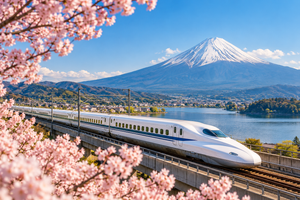
Sample routes and night counts are Smart Japan Trip’s planning recommendations, not bookable packages. Consult JNTO’s official planning tips and confirm transport, accommodation and reservations for your dates. The featured image is illustrative.