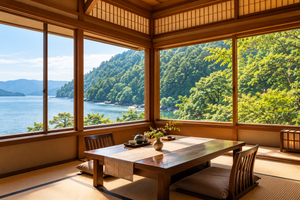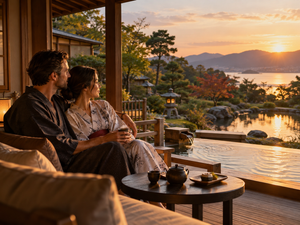
Tokyo and Kyoto can be wonderful places to begin a Japan trip together. But the moments you remember most may come somewhere smaller: an evening in a hot-spring town, a long lunch beside a canal, or an island afternoon with no need to hurry.
If you are looking for romantic places in Japan for couples, think first about the kind of time you want to share. A romantic trip does not have to mean a luxury hotel every night or a perfectly staged photograph. It can mean choosing a place you both enjoy and giving yourselves enough time to experience it.
Here are five destinations beyond Tokyo and Kyoto, with suggestions for how they could fit into a first visit, honeymoon or anniversary trip. They are alternatives to choose between—not five extra stops to squeeze into one holiday. Suggested night counts are our planning recommendations, not fixed requirements.
Choose the atmosphere before choosing the place
| Place | Best suited to | How to make room |
|---|---|---|
| Hakone | A special ryokan stay and a break between cities | Consider 2 nights between Tokyo and Kyoto |
| Kinosaki Onsen | A hot-spring town and evening strolls | Consider 2 nights as a Kansai detour |
| Kanazawa | Gardens, crafts and historic neighbourhoods | Consider 2–3 nights in a redesigned route |
| Kurashiki | Canal-side streets and a slower overnight stop | Consider 1–2 nights west of Kansai |
| Naoshima | Art, architecture and island scenery | Consider 2 nights if ferry logistics fit |
1. Hakone: make the stay part of the experience
Hakone is a natural option to consider when your route connects Tokyo and Kyoto. The appeal for a couple is the chance to pause: stay in a ryokan, enjoy a thoughtfully prepared meal and spend less of the evening deciding where to go next.
Choose your accommodation around the experience you actually want. If you hope to bathe together, confirm a private bathing option rather than assuming the public baths meet that need. Check whether the bath is in your room or separately reservable, and ask about meal times, beds and access from the station.
A way to enjoy it: arrive with enough time to settle in, keep your first afternoon simple, and choose one outing the next day. A museum or time around Lake Ashi can complement the stay without filling every hour. Mount Fuji visibility and outdoor transport depend on conditions, so have another enjoyable plan.
Where it fits: our 14-day Japan itinerary includes two nights in Hakone. Allow time from your accommodation to Odawara before continuing towards Kyoto; do not treat the station-to-station train time as the whole transfer.
Check the official Hakone transport and pass information against your specific journeys. A pass with a Tokyo round trip is not automatically the right choice if you continue west.
2. Kinosaki Onsen: an evening that belongs to the town
Kinosaki Onsen offers a different hot-spring experience: a town with traditional accommodation, streets to stroll through and public bathhouses dotted around it. Rather than making every activity a separate destination, you can shape a stay around the town itself.
A way to enjoy it: leave an afternoon for checking in and exploring gently, then plan your evening around your accommodation’s dinner arrangements. Bathhouse visits can be part of the experience, but you do not need to visit every bath to enjoy your stay.
Public bathing arrangements may involve spending time apart. If sharing a bath matters, ask the ryokan about its private options before booking. Confirm current bathhouse opening schedules and any relevant bathing policies through the accommodation or official Kinosaki tourism website.
Where it fits: consider it as an overnight detour from the Kansai portion of your route. We would usually look at two nights if you want time to unwind, but check the actual rail services and onward journey before deciding. Adding Kinosaki may mean shortening another stay or choosing it instead of Hakone.
3. Kanazawa: gardens, craftsmanship and time to look closely
Kanazawa combines traditional neighbourhoods, crafts, gardens and contemporary culture. It can suit couples who enjoy looking closely at a place: a garden walk, a small exhibition, or the pleasure of choosing something made by a local craftsperson.
The Japan National Tourism Organization’s Kanazawa guide introduces its historic districts, arts and garden setting. Use that as an introduction, then choose the elements that interest both of you.
A way to enjoy it: make one area the focus of each part of the day. You might start with a garden, have lunch, and spend the afternoon around a historic neighbourhood or craft interest. There is no need to complete every district before dinner.
Where it fits: give it two or three nights if it becomes a main base. It changes the route between your larger destinations, so rebuild your train connections and hotel plan rather than simply inserting it into an already full Tokyo–Hakone–Kyoto journey.
Allow flexibility for weather and your walking pace. For a special meal, confirm the menu, full price and booking arrangements directly. The atmosphere you enjoy matters more than whether a restaurant appears on an international list.
4. Kurashiki: a canal-side pause
Kurashiki’s Bikan Historical Quarter is known for its canal, traditional buildings and distinctive white walls. It is a setting for wandering, stopping and enjoying the streets, rather than moving between a long list of major attractions.
A way to enjoy it: choose a walk around the historical quarter, spend time in a museum or shop that interests you, and leave room for lunch. An overnight stay gives you the option of exploring at different times without rushing back to another city.
You can learn more about the setting through the official JNTO guide to the Bikan Historical Quarter. Check individual venue hours when turning your ideas into a day plan.
Where it fits: consider one or two nights if your trip already goes west of Osaka towards Okayama or Hiroshima. If those regions are not in your route, weigh the additional travel against the experience you want. Kurashiki should earn its place in the itinerary, not become another stop just because it photographs well.
5. Naoshima: art and an island rhythm
Naoshima in the Seto Inland Sea can be a rewarding choice for couples who enjoy contemporary art, architecture and coastal scenery. The experience depends as much on leaving time between visits as on the individual artworks.
A way to enjoy it: pick the museums or art sites you most want to see, build the day around any required reservations, and leave time for a meal or a quieter stretch by the sea. Check official photography rules rather than assuming you can take pictures everywhere.
The JNTO guide to Naoshima is a useful introduction. Follow the linked venues and transport operators for current opening days, tickets, reservations and ferry schedules.
Where it fits: consider a two-night stay if it suits your route and accommodation is available. Plan how you reach the ferry, how you move around the island and how you leave. Ferry schedules and weather can affect the journey, so avoid a tight same-day connection to an international flight.
It is not an effortless add-on to every first Japan trip. If art is a shared interest, give it proper space; if it is only a passing curiosity, another destination may fit you better.
Romantic does not have to mean expensive
A special trip can combine a few carefully chosen upgrades with simpler days. You might prioritise a private bath, one memorable dinner or a craft experience, then enjoy local meals and unhurried walks for much of the rest of the journey.
Local restaurants with limited English information can be difficult to discover independently. Our Japan travel planning service can help you choose places around your budget, tastes and route, including everyday dining enjoyed by local residents.
If Japanese-language communication is a concern, Travel Support can help with communication with local restaurants during your trip. Discuss your needs in advance so you know the scope of support. Service fees are separate from the costs of the meals or experiences you choose.
For a clear way to organise the numbers, see our two-week Japan trip budget guide. A good choice should fit your spending limit and the experience you want, without relying on a promise that every local option will be cheaper.
Planning an anniversary or a small surprise
Begin with your partner’s preferences. A quiet room, a personal note, a favourite kind of food or time together with no schedule may be more meaningful than a big public gesture. For practical ideas and arrangements, read our Japan anniversary trip guide.
Choose a suitable evening, then confirm any special arrangements directly with the accommodation or restaurant. Keep the day around it manageable, and allow room for a delayed transfer or a slower afternoon.
If you would like us to help shape a special occasion, describe what would feel personal to the two of you during your planning consultation. Availability and arrangements depend on the venue; discuss the specific request before making a commitment.
How to add one destination without overloading the trip
Choose the strongest match, decide how many nights it needs, then remove or shorten another part of the route. Compare the full transfer from hotel to hotel—not only the headline train or ferry time.
For example, Hakone can be the pause between Tokyo and Kyoto. Kinosaki could become the main hot-spring stay in a Kansai-focused journey. Kanazawa needs a redesigned route, while Kurashiki and Naoshima make more sense when your travel already includes the western part of Japan.
These are choices to personalise, not a suggested route through all five. The guide to planning your first Japan trip can help you decide the bases before booking hotels.
Frequently asked questions
Which place is best for a first trip as a couple?
Choose by your interests and route. Hakone is an option within our Tokyo–Kyoto model; Kinosaki suits a hot-spring town experience; Kanazawa offers gardens and crafts; Kurashiki offers a canal-side historical quarter; and Naoshima suits a shared interest in art.
Can we visit these places as day trips?
Some can be visited for the day from a suitable base, but whether that is a good choice depends on the actual connections and how much time remains on arrival. If the point is a restful stay or an evening together, an overnight visit may serve you better.
Will these places be quiet?
Do not assume that being outside Tokyo and Kyoto means being empty. Popular areas can still be busy. Choose travel times and activities with realistic expectations, and respect the residents whose neighbourhoods you visit.
Do we need a luxury budget for a honeymoon or anniversary?
No. Decide which stay or experience matters most, price it specifically, and balance the rest of the trip around your budget. Time, comfort and personal choices can make a trip special at different spending levels.
Find the places that feel right for you
The most romantic place in Japan is not the same for every couple. It may be a hot-spring town, a garden, an island or a neighbourhood restaurant where you can enjoy the evening together.
Tell us what you both enjoy, how you like to travel and what you want to remember. Our Planning service can help you turn those preferences into a route with room to enjoy it.
Your Japan story starts here.
Tell us about your dates, interests and the kind of trip you want. Start with a free consultation to discuss how we can help.
Destination background is linked to official tourism sources. Night counts and suggested pacing are Smart Japan Trip’s recommendations. Confirm accommodation, transport and venue conditions for your dates. The featured image is illustrative.