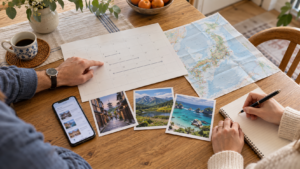
How much does a two-week trip to Japan cost? For a couple planning their first visit, the answer depends less on the number of famous sights you visit than on your dates, hotel choices, route and the experiences you want to share.
As a practical starting point, the illustrative budgets below come to approximately ¥392,000, ¥635,000 or ¥1,033,000 for two people for 13 nights and 14 days in Japan. These totals exclude international flights and several personal extras. They are three planning models with transparent assumptions—not surveyed averages, live hotel prices or a quote for your dates.
You can use them to understand where the money goes, then replace the assumptions with actual prices. For a first journey with comfortable stays and a few memorable experiences, that is more useful than a single daily figure with unclear inclusions.
What this two-week Japan budget includes
Every figure in this article is for two adults sharing one room, spending 14 days and 13 nights in Japan. The route is based on Tokyo, Hakone, Kyoto and Osaka, with arrival in Tokyo and departure from the Osaka area. See our 14-day Japan itinerary for the day-by-day version.
The models include accommodation, food and drinks, a transport allowance, sightseeing and experiences, a small allowance for practical extras, and a 10% contingency. Transport is intended to cover the main one-way route, local journeys and airport transfers; it is an allowance to check against your chosen services, not a calculated ticket bundle.
Add separately: international flights, travel insurance, substantial shopping, any entry-document costs relevant to you, and optional planning or travel-support services. Private drivers, premium cabins and expensive private experiences can also exceed these allowances.
Three example budgets for two people
The labels describe spending choices, not guaranteed hotel standards. Prices for the same room can differ substantially by travel date and availability. A lower-cost model may require flexible dates, simpler accommodation and careful choices.
| Cost for two | Careful spending | Comfort-focused | More room for special stays |
|---|---|---|---|
| Accommodation · 13 nights | ¥182,000 | ¥312,000 | ¥520,000 |
| Food and drinks · 14 days | ¥84,000 | ¥140,000 | ¥224,000 |
| Transport allowance | ¥60,000 | ¥70,000 | ¥90,000 |
| Sightseeing and experiences | ¥20,000 | ¥40,000 | ¥80,000 |
| Practical extras | ¥10,000 | ¥15,000 | ¥25,000 |
| Subtotal | ¥356,000 | ¥577,000 | ¥939,000 |
| Contingency · 10% | ¥35,600 | ¥57,700 | ¥93,900 |
| Total, excluding flights | ¥391,600 | ¥634,700 | ¥1,032,900 |
The accommodation assumptions are an average of ¥14,000, ¥24,000 or ¥40,000 per room per night across the trip. The food assumptions are ¥6,000, ¥10,000 or ¥16,000 per couple per day. These are deliberately chosen inputs for the models, not claims that a particular hotel or meal is available at those prices.
A trip can cost less or considerably more. The table helps you see the effect of your choices; it does not define the minimum needed to visit Japan or an upper limit for luxury travel.
Accommodation: the biggest decision to price first
Start by checking suitable rooms for your real dates in each base. Note the total payable price, room size, bed configuration, cancellation terms and meal inclusions. Confirm whether a price is per room or per person, especially when comparing ryokan stays.
A single average can hide the shape of the trip. You might choose straightforward city hotels and spend more on two nights in a ryokan, or prioritise larger rooms throughout. Price each part separately before deciding whether the average is realistic.
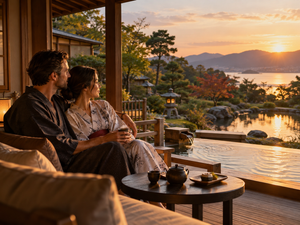
For example, eleven room nights at ¥22,000 plus two special-stay nights at ¥55,000 would make an accommodation budget of ¥352,000 for the couple. This is another arithmetic example, not a property quote. If the actual accommodation total is higher, update your overall budget rather than trying to absorb the difference invisibly.
Check whether taxes and other mandatory charges are already included in the booking total. Add any amounts payable separately once the property confirms them. Do not assume a small miscellaneous allowance will cover every additional charge.
Food: allow for everyday meals and the meals you will remember
Choose an everyday allowance that reflects how you like to eat. Breakfast, lunch, dinner, coffee, snacks and drinks all contribute. A couple who enjoys drinks with dinner will need a different allowance from a couple who mostly chooses simple meals.
In the comfort-focused model, ¥10,000 per day for two people gives ¥140,000 over 14 days. You do not need to spend the same amount each day: a simpler lunch can sit alongside a more expensive evening. Price any important restaurant reservation separately.
Avoid double-counting food included with accommodation. If a ryokan includes dinner and breakfast, remove the corresponding meals from your separate food estimate. Likewise, check whether a food experience replaces a meal or is an additional activity.
For an anniversary or honeymoon, decide how much you want to set aside for a special dinner before booking it. Confirm the full cost of any private room, drinks, cake or other arrangement directly with the venue.
Transport: budget for your actual route
Build a list of journeys: airport to hotel, Tokyo to Hakone, onward travel through Odawara to Kyoto, Kyoto to Osaka, local trips and the final airport transfer. Add any day trips you intend to take.
Look up the current prices for your chosen operators, seat types and routes. Include extra fares or supplements where required, and decide whether occasional taxis are useful for your luggage or mobility needs.
A national rail pass is not automatically the cheapest choice for a two-week holiday. Compare the cost of eligible individual journeys with the relevant pass, its purchase conditions and any supplements. Use the official JAPAN RAIL PASS price information rather than an old screenshot or an unrelated itinerary.
The ¥70,000 transport allowance in the comfort-focused example must be replaced if your ticket choices cost more. Returning to Tokyo for a flight, adding another distant region or booking private transfers changes the calculation.
Experiences: choose the few that matter
Walking through neighbourhoods and enjoying the atmosphere can fill much of a trip, but paid admissions and organised activities still need a place in the budget.
Write down the experiences you most want to share, then price them for two people. A cooking class, a guided visit, a craft activity and a private experience can have very different costs. The table’s experience allowance is a spending envelope, not a promise that it covers any particular combination.
When funds are limited, protect the experience that matters most and simplify elsewhere. A carefully chosen activity with time to enjoy it can be more satisfying than several bookings made only because they appear on a popular list.
Small costs that are easy to overlook
Keep a line for mobile connectivity, luggage forwarding or storage, laundry and other practical extras. Check the services you plan to use, including whether a price applies per device, bag or person.
Do not put major shopping in this category. If you want clothing, ceramics or other souvenirs, set a separate shopping limit. The same applies to optional planning services and support during your trip: add their actual prices as separate lines.
The 10% contingency in these models is our chosen planning buffer, not a required fee or a guarantee against every unexpected expense. Add it to the costs you have not fixed yet, and decide how much flexibility would make you comfortable.
What about flights from Europe?
Get actual flight quotes from your departure airport for your dates. Compare the total for two travellers, including the baggage and seat options you need. Also compare arriving and departing from different Japanese cities with returning to the same airport.
A cheaper airfare can come with an extra train journey or hotel night. Look at the total holiday cost and the time you would lose to backtracking before choosing.
Your complete budget = your Japan spending + international flights + separately priced extras. For example, the comfort-focused model starts at ¥634,700 for Japan spending; your own flight quote is added to that, not included in it.
How to understand the budget in euros
Keep the original prices in yen, then convert them using the exchange rate and fees that apply when you pay. Exchange rates move, and your card or bank may use a different effective rate from a headline rate.
If a rate is expressed as yen per euro, divide the yen total by that figure to obtain the euro amount, then account for applicable fees. Label the rate and date in your budget so you know which figures need refreshing.
Do not treat a converted total as fixed until the relevant payments have been made. For accommodation or activities charged in another currency, record the currency you will actually pay.
Where to save without making the trip harder
Reduce backtracking. An efficient route can reduce unnecessary transport and hotel changes. Confirm the flight trade-off before choosing different arrival and departure airports.
Compare complete room prices. A room that includes meals may compare differently once you account for separate food spending. A cheaper location may also add transport time or taxi costs.
Choose your upgrades. Decide whether a special stay, a larger room or a memorable dinner matters most to you. You do not need to upgrade every part of the trip.
Protect free time. Some of the most enjoyable moments come from a walk, an unplanned café stop or revisiting a favourite neighbourhood. Your itinerary does not need a paid activity in every time slot.
The Japan National Tourism Organization’s budget-travel guidance offers additional ideas across accommodation, food and transport. Check availability and conditions for the options that fit your own route.
Discover local dining that fits your budget
A memorable meal does not always need to be an expensive one. Neighbourhood restaurants enjoyed by local residents can offer rewarding food experiences within a modest budget. Some are harder to discover through English-language searches, and choosing the right place takes more than following a popularity ranking.
With our Japan travel planning service, we can help you choose local restaurants and experiences around your budget, tastes and route—including places with limited English information. The aim is to help you spend thoughtfully and enjoy more of everyday Japan, whether you prefer a simple neighbourhood meal or a special dinner.
If communicating in Japanese is a concern, our Travel Support plan can help with Japanese-language communication with local restaurants during your trip, such as clarifying a booking or asking about a menu. Discuss the support you need with us in advance so that you know what is covered.
Recommendations do not guarantee a lower price than every alternative, and service fees are separate from your dining budget. The value is finding options that fit you and feeling more confident about enjoying them.
Frequently asked questions
Are these figures per person or per couple?
They are for two adults sharing one room. The comfort-focused total of ¥634,700 is approximately ¥317,350 per person when split equally, excluding flights and the separately listed extras.
Does a “two-week trip” mean fourteen hotel nights?
Not in these examples. We assume arrival on Day 1 and departure on Day 14, giving thirteen nights in Japan. Add another night if your flight schedule or plans require it.
Is Japan expensive for couples?
It depends on your choices and the prices available for your dates. Shared accommodation can help, while private experiences and special stays increase the total. Start with room quotes and the main transport route rather than assuming one national daily average will describe your trip.
Should we budget more for a honeymoon?
Only for the upgrades you choose. Price the special stay, dining and other personal touches individually, then add them to your base budget. “Honeymoon” does not have to mean upgrading every night.
Are Smart Japan Trip’s services included?
No. These models describe spending on the trip itself. If you want help with planning or support while travelling, review the relevant service and add its current price separately.
Turn a budget into a trip that fits you
Once you know your spending limit, decide what you want that money to make possible. Keep your main priorities visible as you compare hotels and experiences, and update the totals as actual quotes replace the assumptions.
Our step-by-step guide to planning your first Japan trip explains the order of decisions. If you would like help shaping the route and choosing where to spend, explore our Japan travel planning service. For personal support during your stay, see Travel Support.
See the planning approach in practice: explore our sample Japan itinerary and service comparison, then discuss how the route could be adapted to your dates, budget and pace.
Your Japan story starts here.
Tell us about your dates, interests and the kind of trip you want. Start with a free consultation to discuss how we can help.
Budget models prepared by Smart Japan Trip in October 2026. All model amounts are illustrative assumptions, not live quotations or statistical averages. Confirm actual accommodation, transport and activity prices for your dates. The featured image is illustrative.